The Ultimate Global Whisky Encyclopedia
The World in a Glass: A Global Masterclass on Whisky
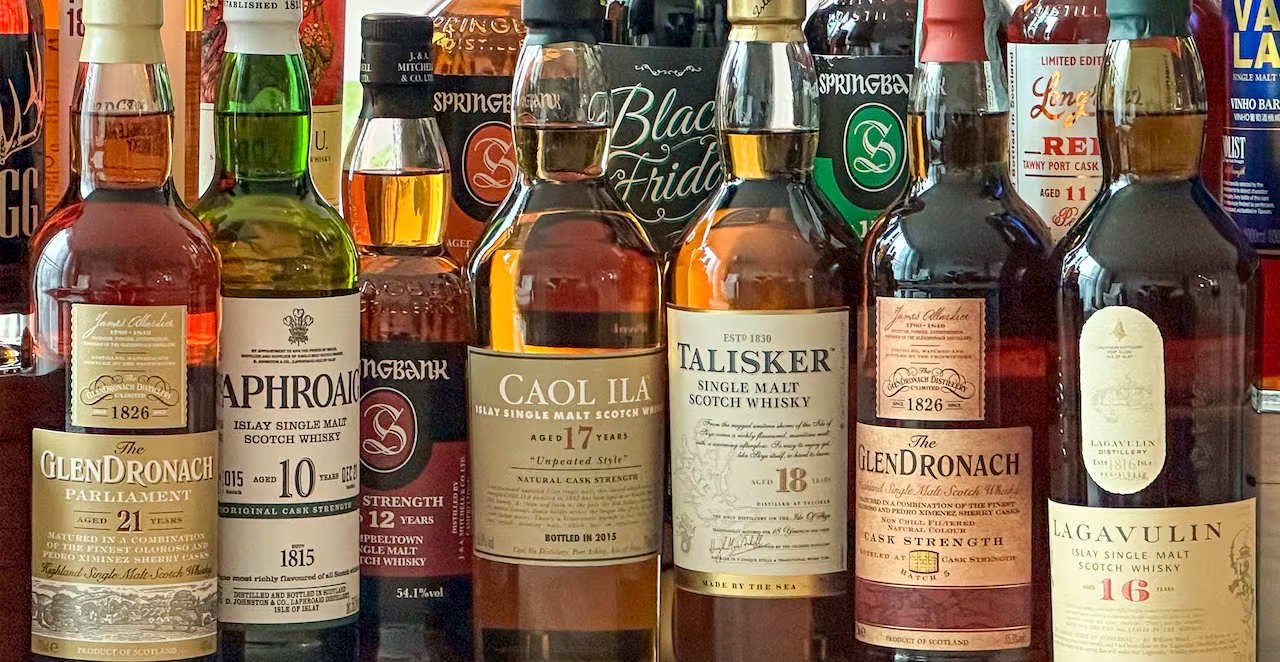
Whisky is more than a spirit; it is a liquid archive of geography, grain, and the passage of time. To the uninitiated, it might just be "brown spirit," but for the enthusiast, it is a complex intersection of variables. This guide serves as the ultimate map to navigate every major type of whisky produced today.
I. The Foundation: Mash Bill & Distillation
The identity of a whisky is first determined by its Mash Bill (the recipe of grains) and the type of still used for distillation.
1. Single Malt (The Purest Expression)
To be labeled as a Single Malt, the spirit must be made from 100% malted barley and produced at a single distillery. It is traditionally distilled in copper pot stills, which retain the heavy, flavorful oils of the grain, resulting in a rich and complex profile.
2. Grain Whisky (The Versatile Foundation)
Distilled in high-efficiency column stills, grain whisky can be made from corn, wheat, or unmalted barley. It is typically lighter and more neutral, serving as the canvas for blended whiskies. However, aged Single Grains are now celebrated for their creamy, vanilla-like elegance.
3. Rye Whiskey (The Spicy Rebel)
In the United States, Rye whiskey must consist of at least 51% rye grain. It is famous for its bold "kick"—expect notes of black pepper, clove, and cinnamon. It is the essential heart of classic cocktails like the Manhattan.
II. The Traditional Giants: Scotland, USA, and Ireland
1. Scotch Whisky
The gold standard of the industry. It must be aged in Scotland for at least 3 years.
- Islay: Known for heavy Peat, smoke, and medicinal brine.
- Speyside: Famous for fruit, honey, and floral elegance.
2. American Whiskey: Bourbon & Tennessee
Bourbon must be 51% corn and aged in new charred oak barrels, which provides the signature sweetness. Tennessee Whiskey goes a step further with the Lincoln County Process, filtering the spirit through charcoal for extreme smoothness.
3. Irish Whiskey
Traditionally triple-distilled, making it significantly lighter and smoother than its Scottish cousin. It rarely uses peat, resulting in a clean, fruity, and approachable profile.
III. The New World Legends: Taiwan & Korea
New world distilleries are proving that extreme climates can be an "accelerator" for quality.
1. Taiwanese Whisky (Tropical Intensity)
Distilleries like Kavalan take advantage of the high heat. The "Angel's Share" in Taiwan is up to 12% per year, meaning the whisky interacts with the wood much faster than in Europe. The result is a burst of tropical fruits like mango and dark chocolate.
2. Korean Whisky (The Four-Season Breath)
Korea is the newest rising star. The extreme temperature difference between the harsh winters and humid summers causes the oak casks to "breathe" aggressively.
- Three Societies (Ki One): The pioneer of Korean single malt.
- Character: Bold oak, intense spices, and a concentrated malt profile that defies its young age.
IV. The Master Comparison Matrix
| Category | Main Grain | Aging Logic | Key Tasting Notes |
|---|---|---|---|
| Scotch | Malted Barley | Slow & Damp | Peat, Smoke, Malt, Sea Salt |
| Bourbon | Corn (51%+) | Charred New Oak | Vanilla, Caramel, Sweet Toffee |
| Rye | Rye (51%+) | Spicy Boldness | Pepper, Baking Spices, Dry Finish |
| Grain | Wheat/Corn | High Purity | Creamy, Light Vanilla, Smooth |
| Taiwanese | Barley | Tropical Rapid | Mango, Pineapple, Toffee |
| Korean | Barley | 4-Season Extreme | Intense Oak, Spice, Deep Malt |


Comments
Post a Comment